AHA! Brain · Quest to 4 Brain Kingdoms
AHA!Brain
A magician’s mystery box that turns four brain lobes into four buildable experiments for curious young minds.
- Role
- Product Designer · Revamp Lead
- Team
- MEandMine
- Year
- 2022
01The system
Make the invisible work of the brain tangible.
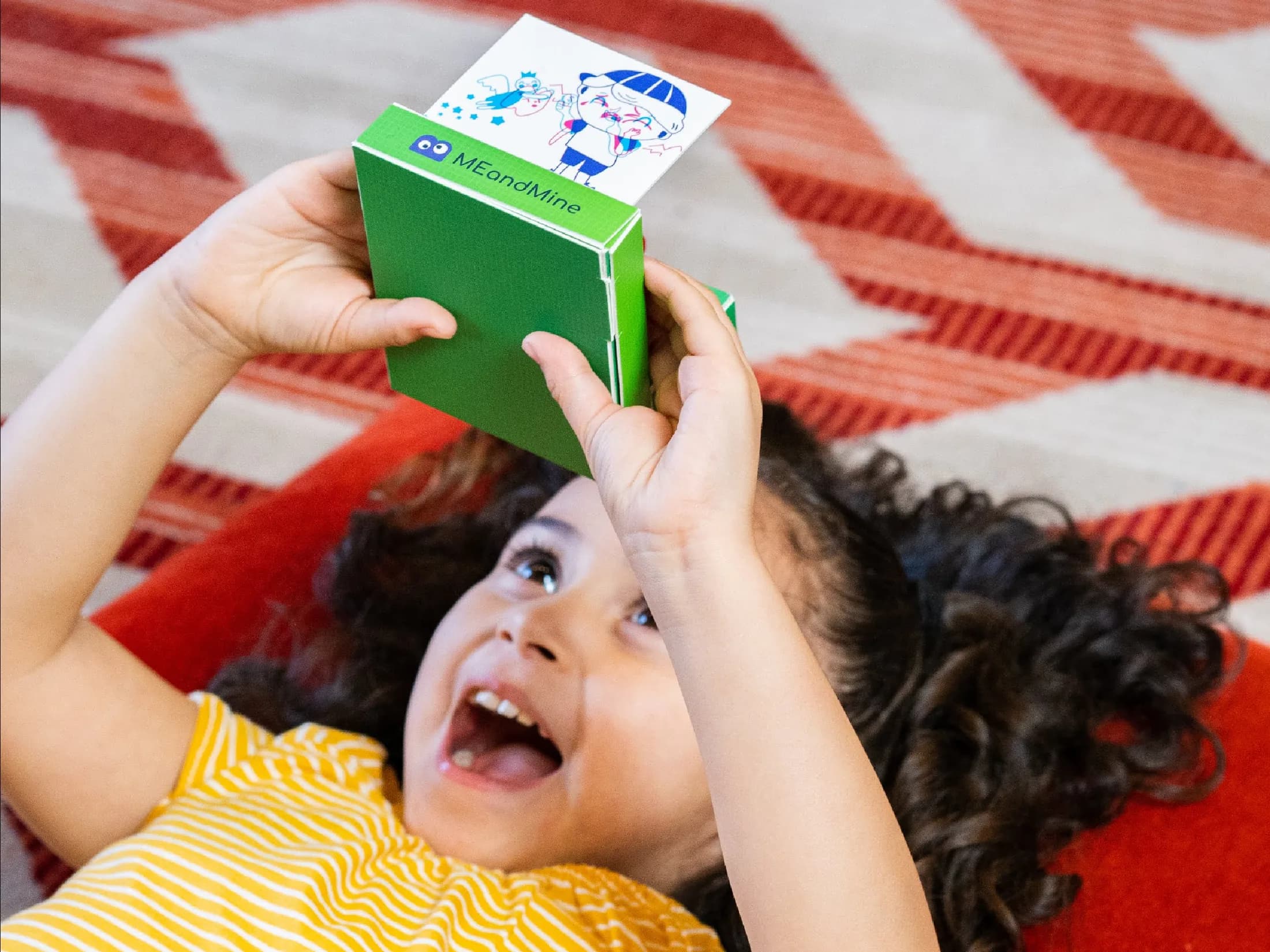
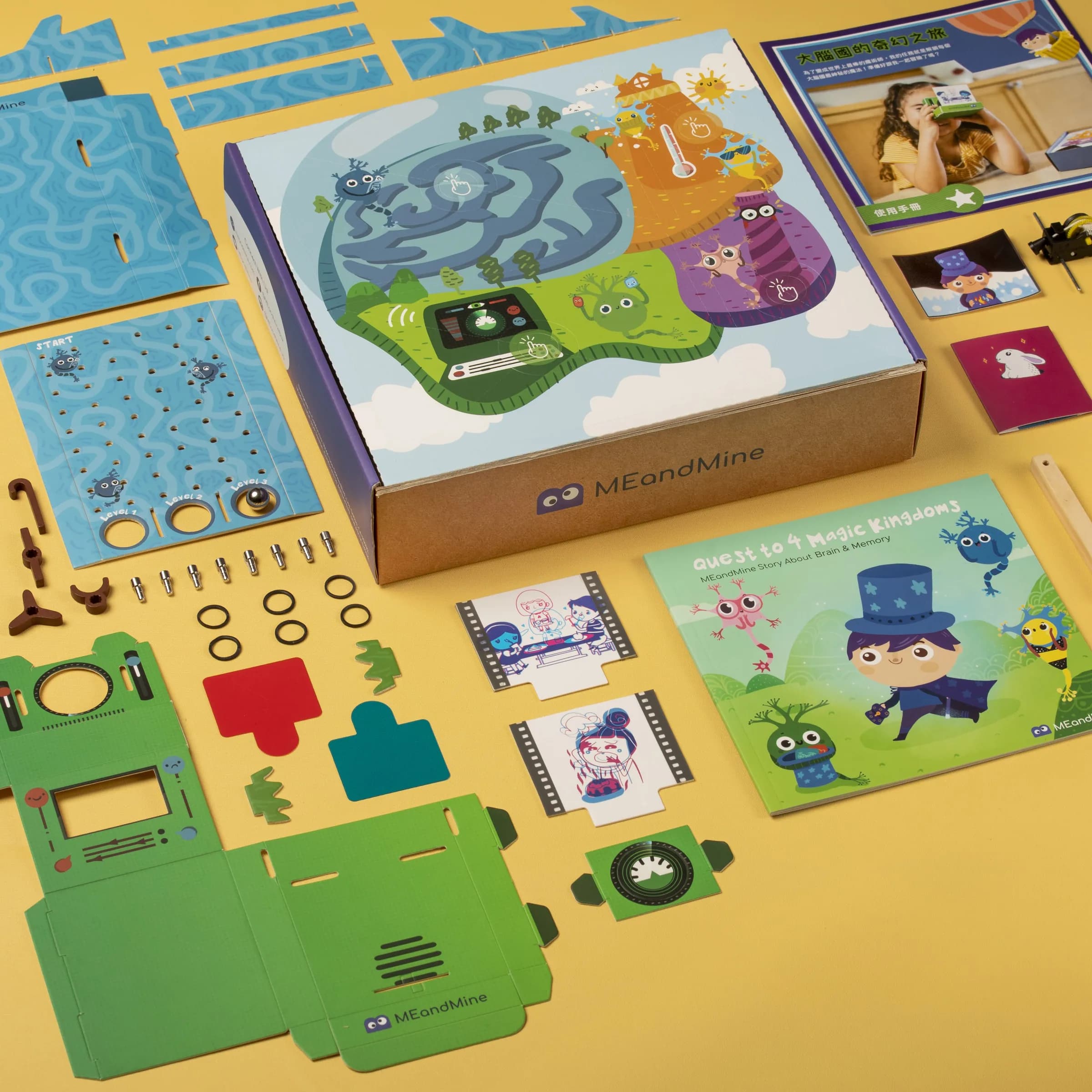
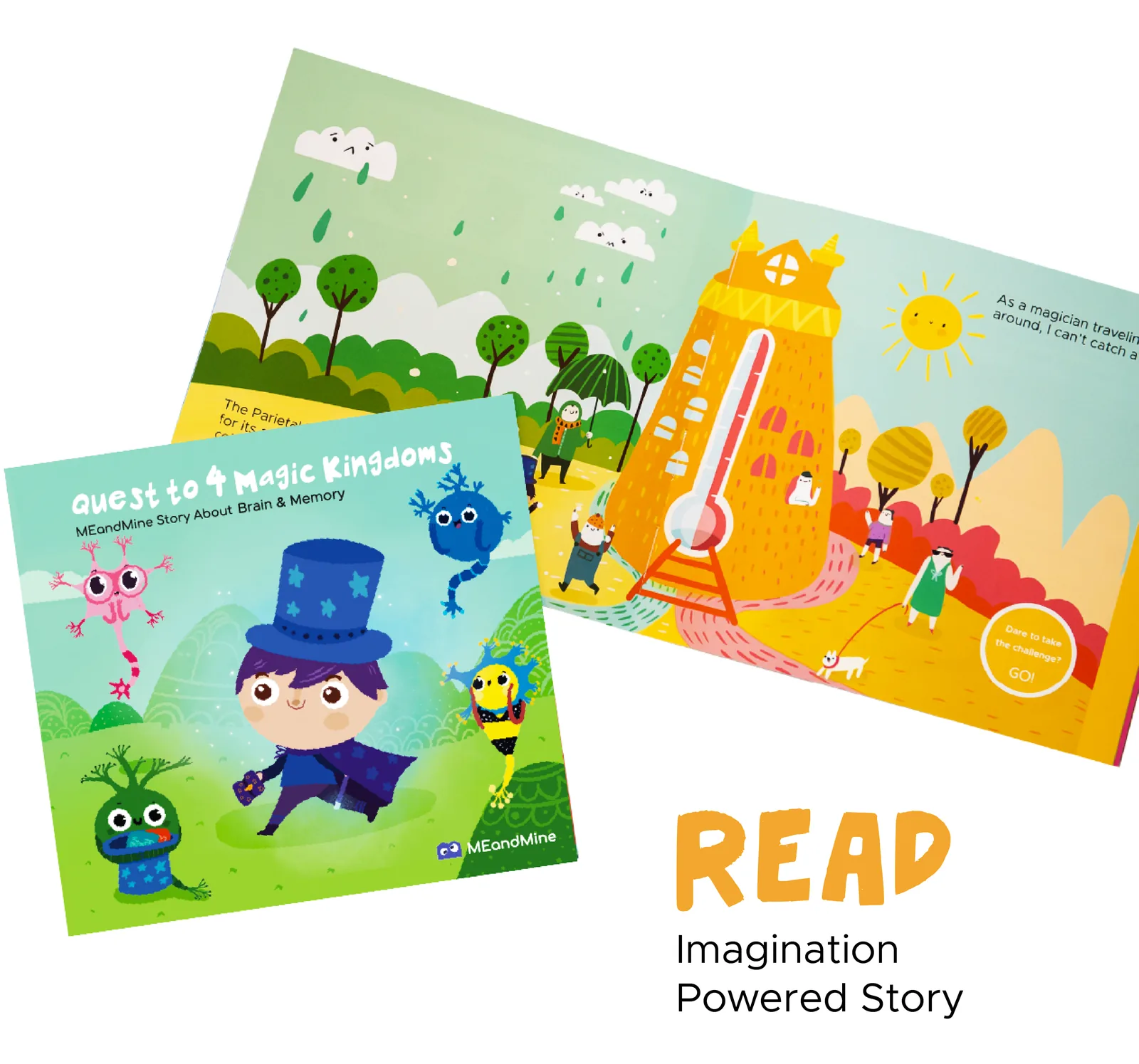
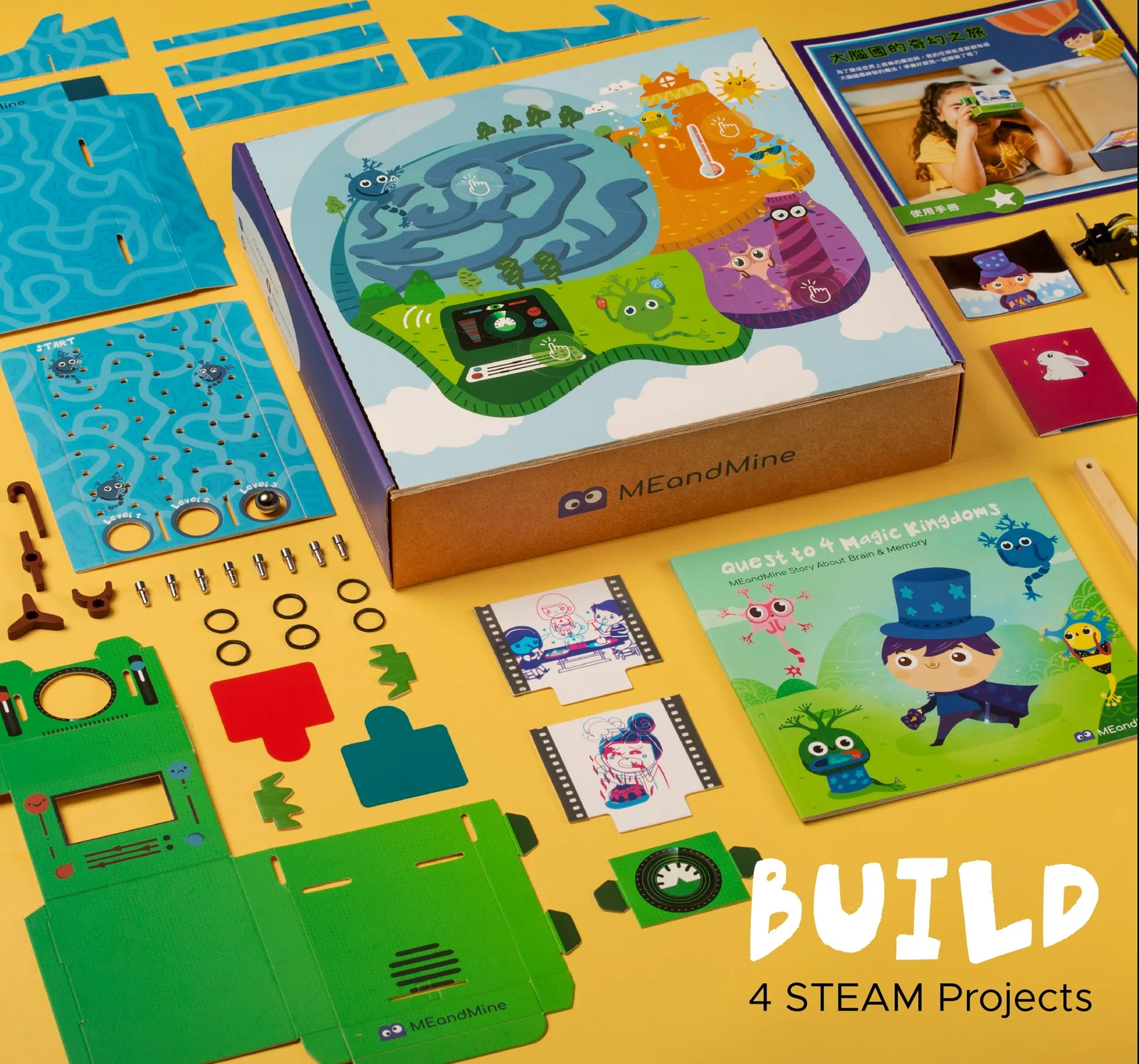
Children travel with a magician through four brain-lobe kingdoms. A story opens the door; four DIY STEM projects then let them explore how memory, perspective, planning, and problem-solving feel in action.
- 4
- brain kingdoms
- 4
- reusable builds
- 3
- steps: read, build, play
A toolkit for curiosity
The story does not explain the answer. It creates a reason to discover it.
Each kingdom introduces a power of the brain, then hands the child a physical challenge that makes that power observable through play.
01 Insert a lens · shift the reading
02Temporal lobe · Memory Camera
“The interaction is the explanation.”
One scene. Two emotional readings.
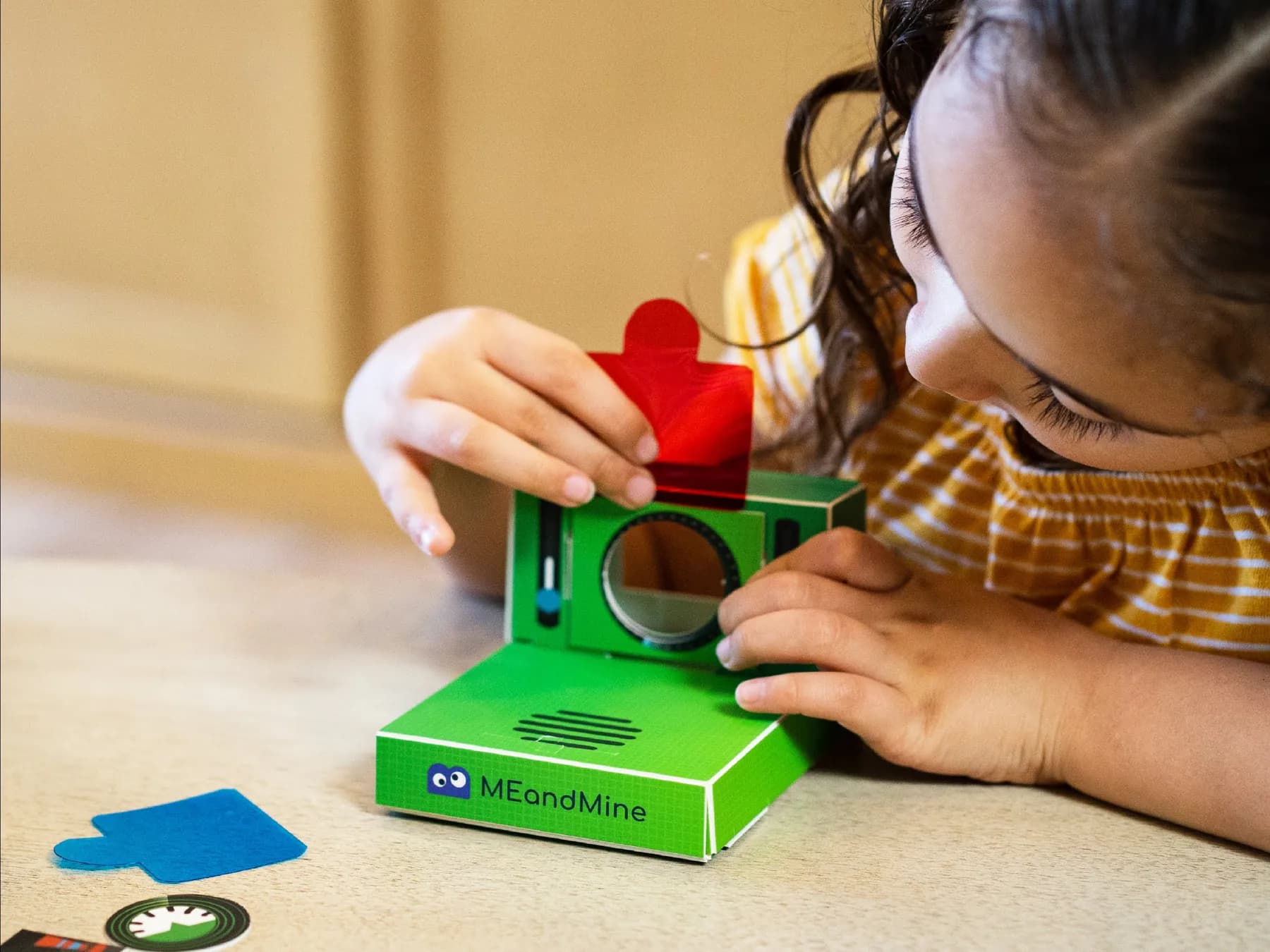
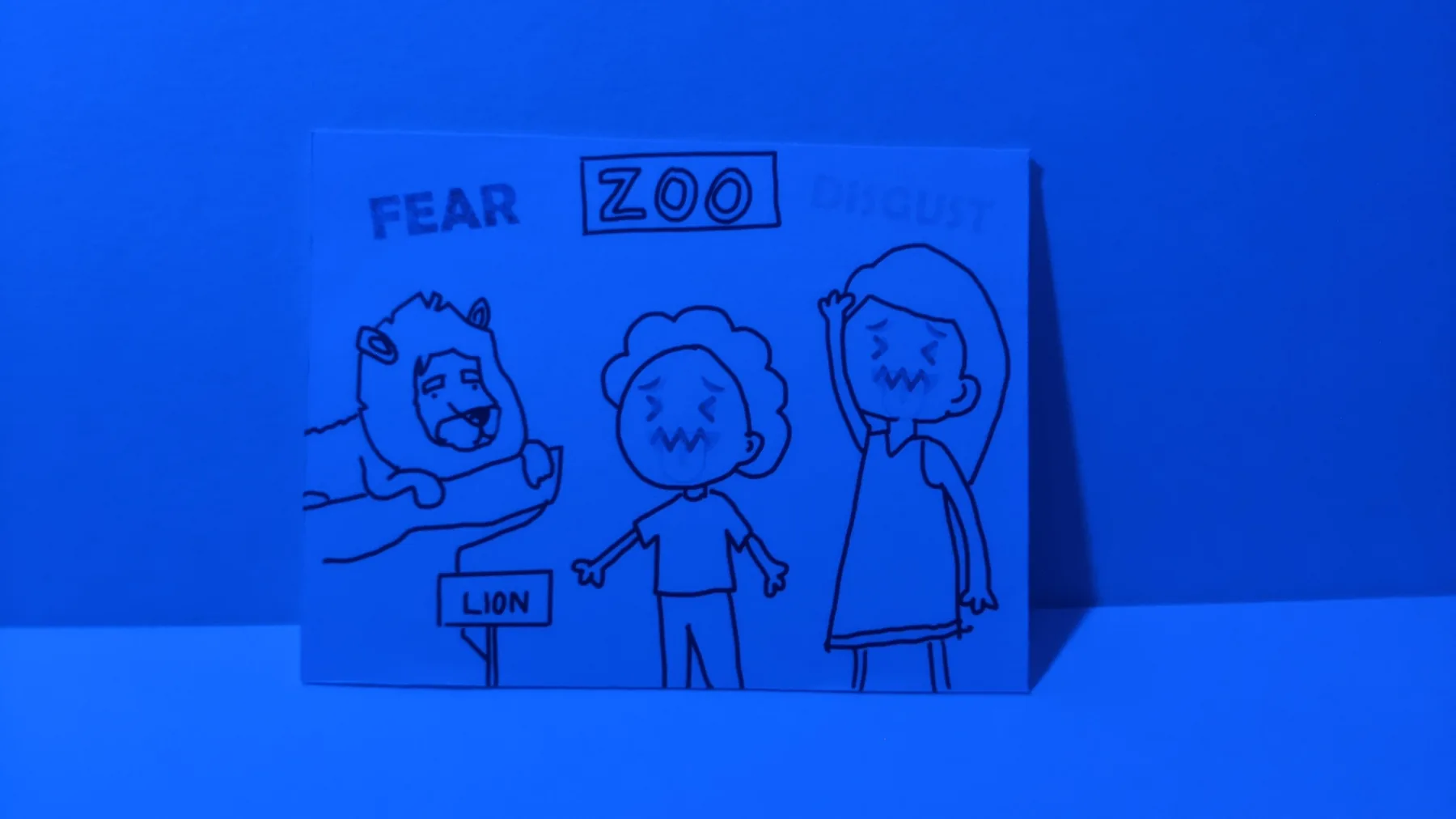
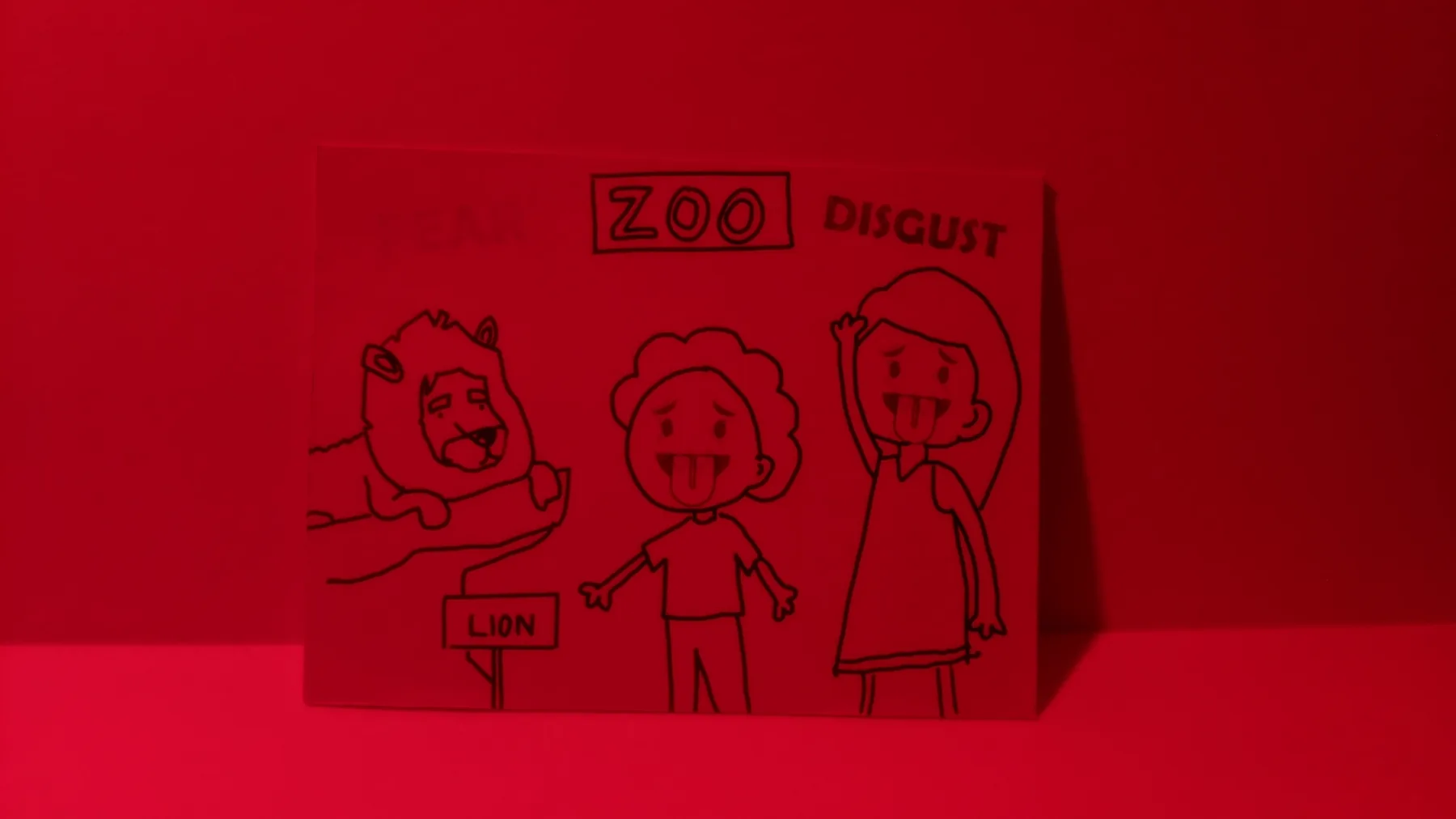
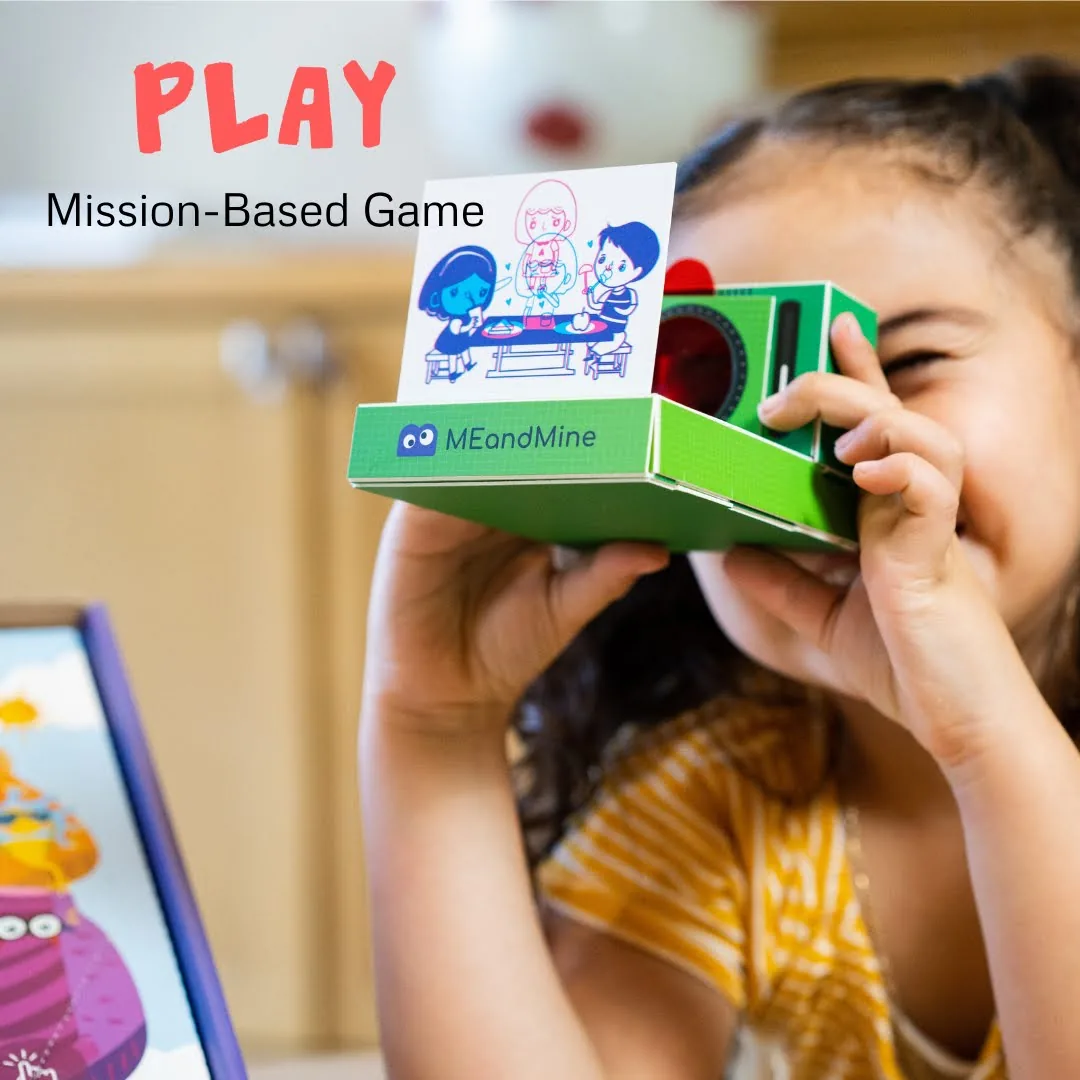
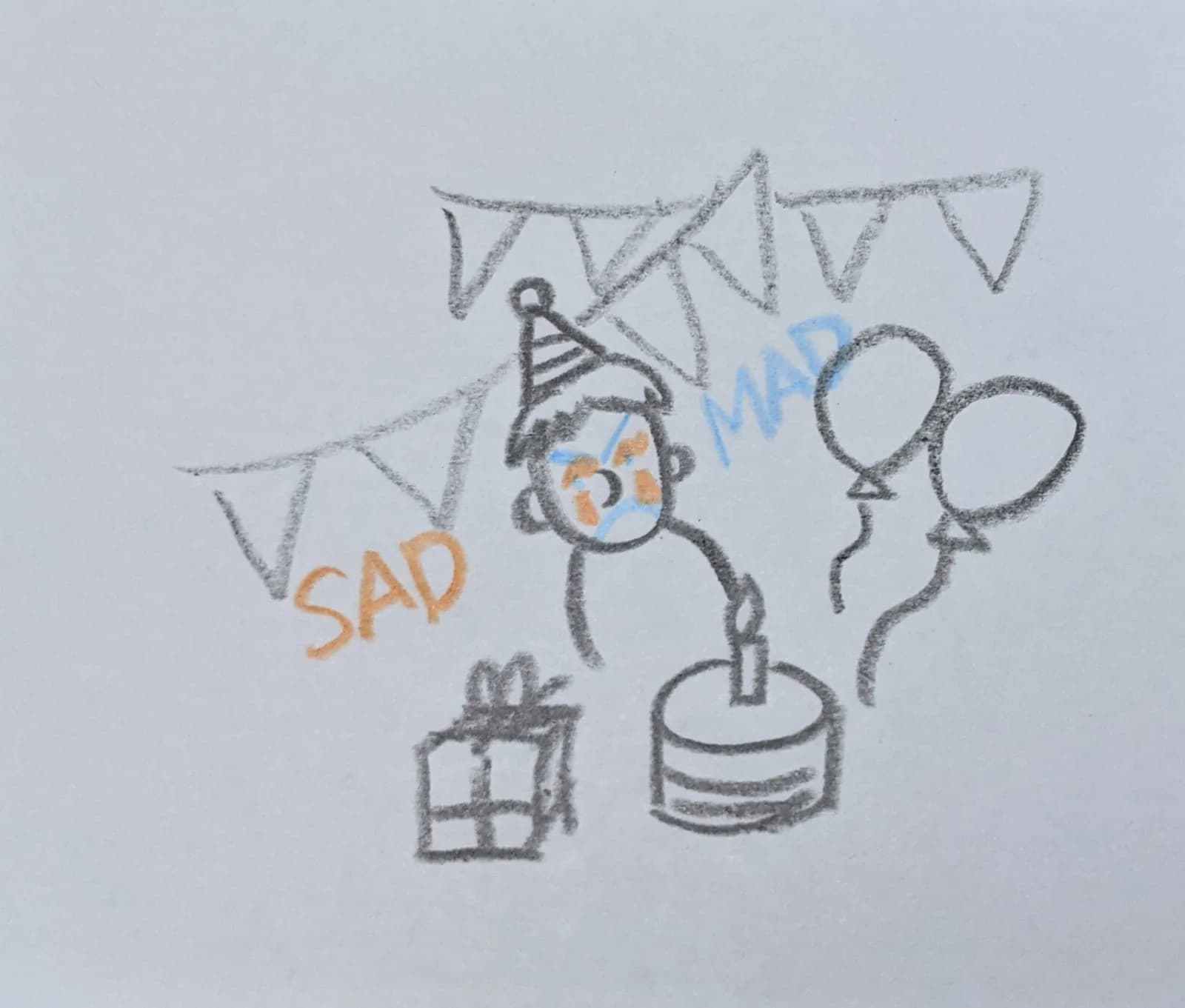
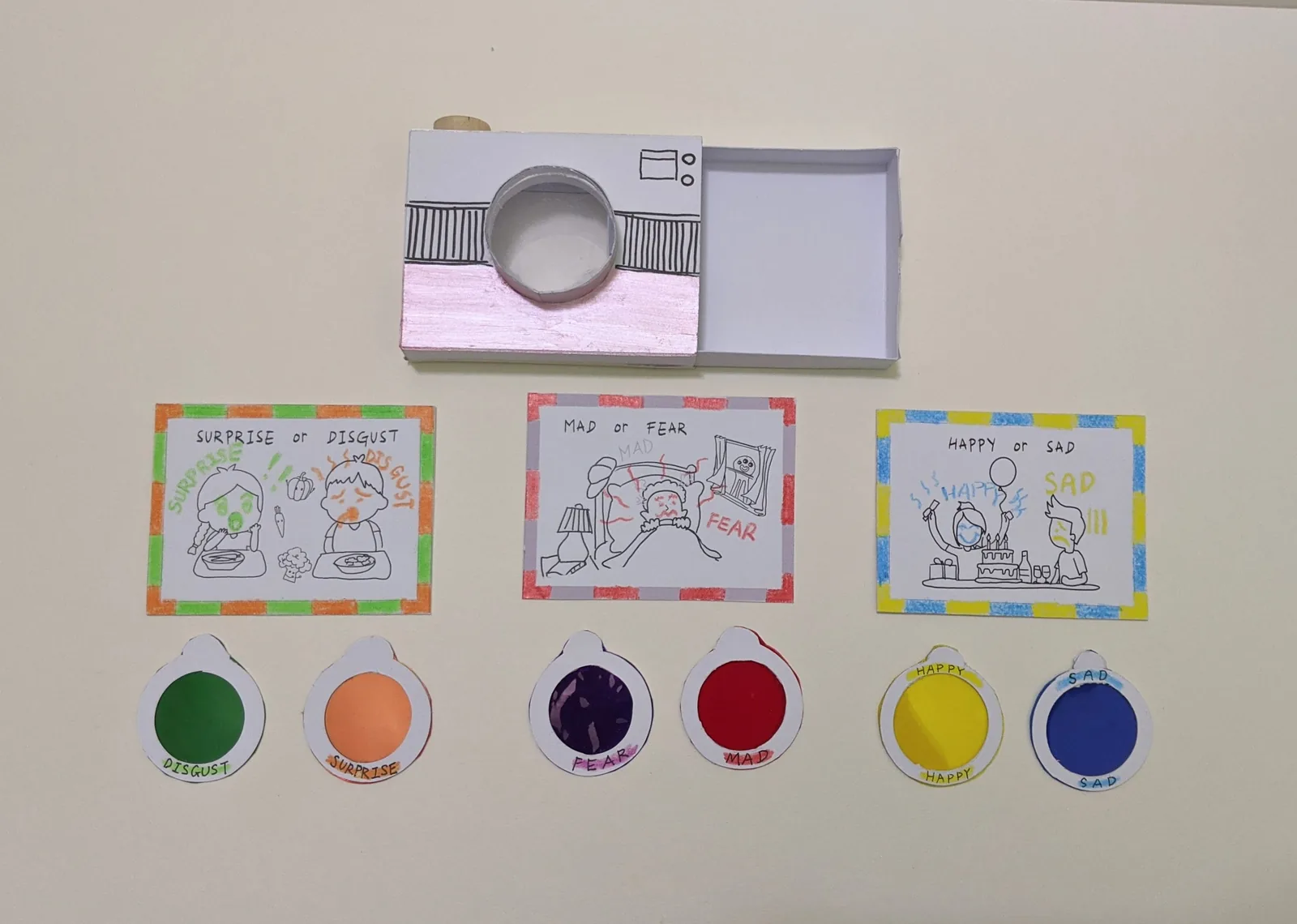
The temporal lobe connects memory and emotion. The Memory Camera makes that relationship physical: each scenario card contains two overlaid interpretations, while red and blue lenses filter the artwork to reveal a different view of the same moment.
- 01Look
Start with one layered event.
- 02Filter
Choose a red or blue emotion lens.
- 03Reframe
See how perspective changes what is remembered.
03Frontal lobe · 3D Maze
Planning becomes a path you can build.
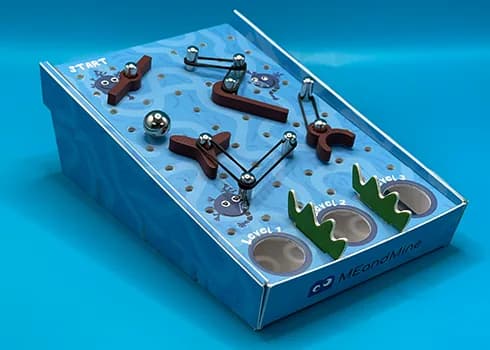
Children arrange modular obstacles before releasing the ball. When the route misses a goal, the result is immediate and useful: revise the plan, rebuild the path, and test it again.
- Plan
Choose a target and imagine the route.
- Build
Combine modules into a path.
- Test
Release the ball and iterate.
04Experience loop
Read. Build. Play. Remember.
A three-step rhythm connects narrative imagination with hands-on learning and repeatable play.
 01
01Read
Kids follow a magician through four kingdoms, each shaped by the power of a different brain lobe.
 02
02Build
Four illustrated projects turn neuroscience into something children can assemble with their own hands.
 03
03Play
Each finished build becomes a reusable toy for exploring memory, planning, perception, and more.
05Design process
Keep the learning behavior. Remove what gets in its way.
As revamp lead, I focused on the temporal- and frontal-lobe activities—from concept sketches and physical prototypes through testing and the handoff for final form and manufacturing.
05A · Memory Camera
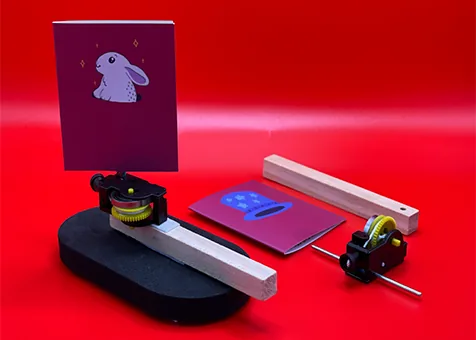
From six emotion lenses to two reliable perspectives.
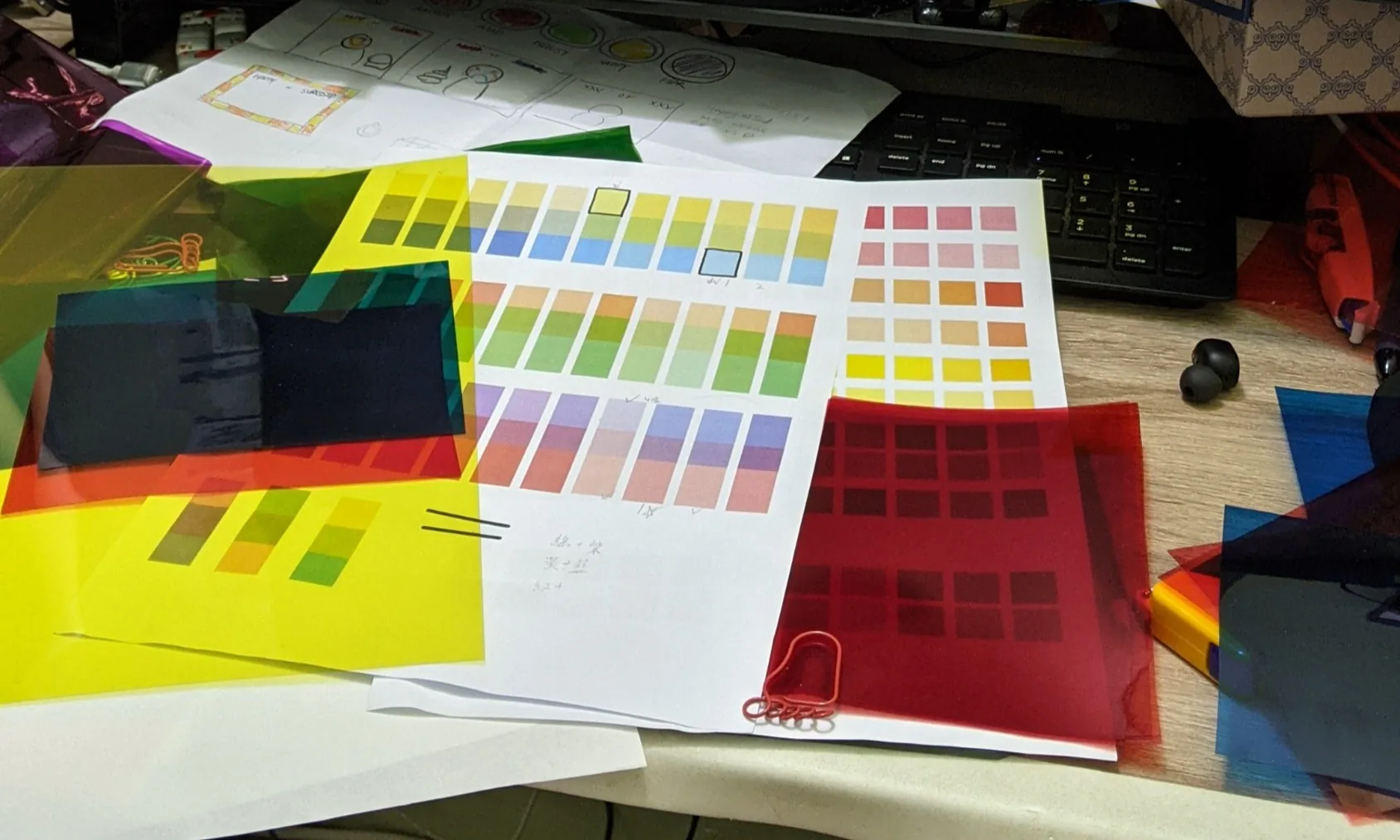
Six colors mirrored the product line’s six emotion categories.
Not every color filtered artwork consistently enough for reliable production.
Red and blue preserved the perceptual surprise with simpler, more predictable manufacturing.
05B · 3D Maze
From unlimited paths to the right amount of choice.
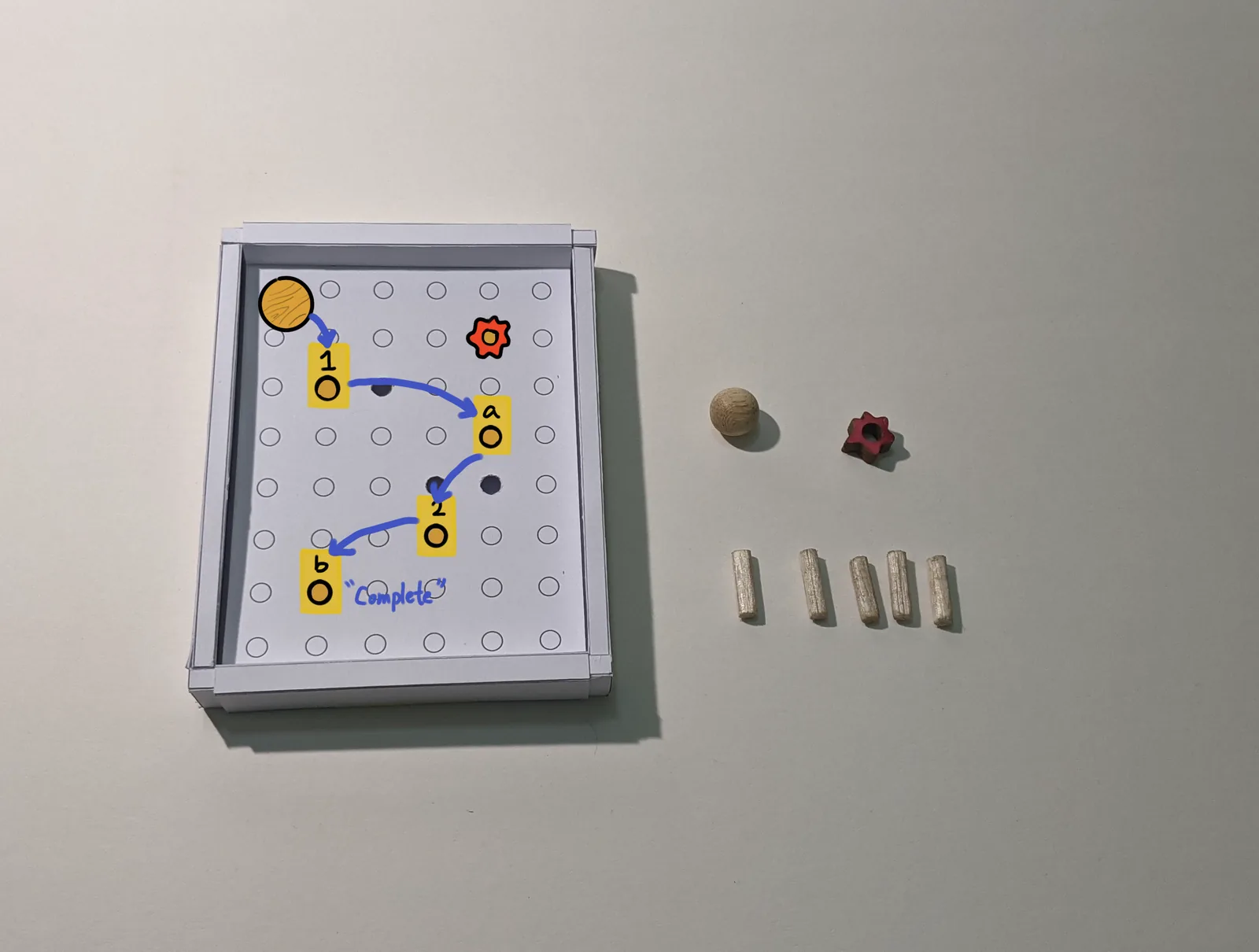
The first pin-based prototype offered freedom, but it was too complicated for children to build independently and too expensive to produce.
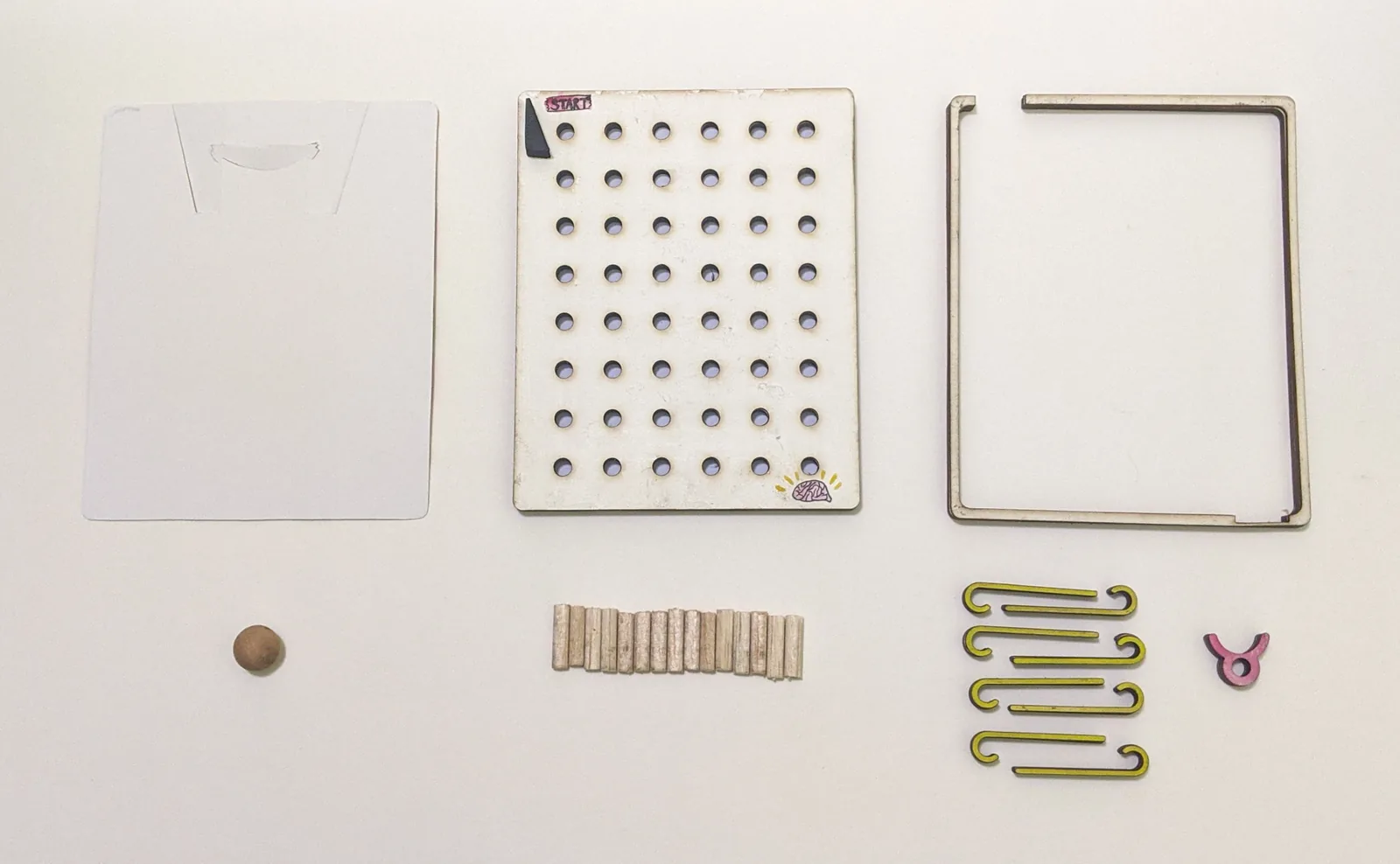
The second direction used modular foam pieces and a foldable slope. Reusing materials already in MEandMine’s supply chain reduced cost while keeping the essential behavior: plan before the ball moves.
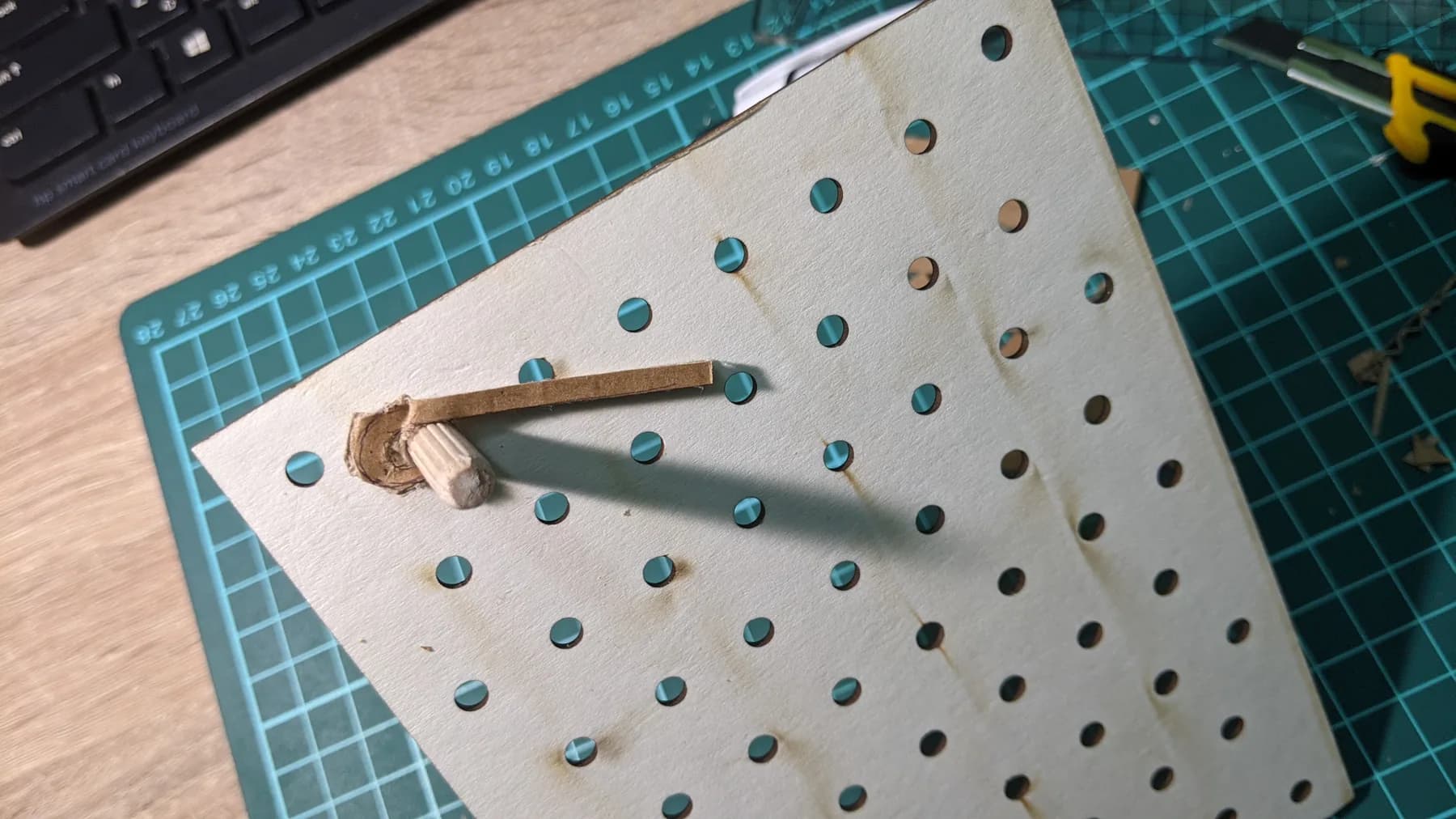
01 Pin-board study
02 Modular route
03 Final build
06Historical outcomes
From the prototype table to shelves and gift guides.
- Selected as Amazon’s Choice on Amazon US
- Included in Amazon’s Small Business Gift Guide
- Featured in Kiddos Magazine
- Sold through eslite bookstores in Taiwan
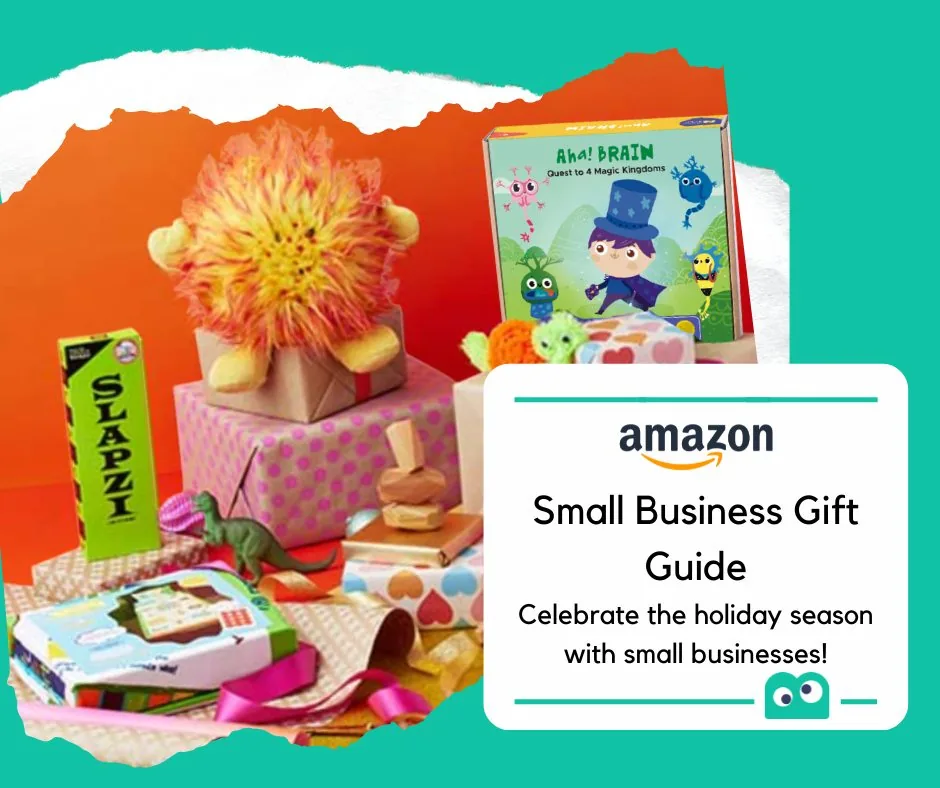
Small Business Gift Guide
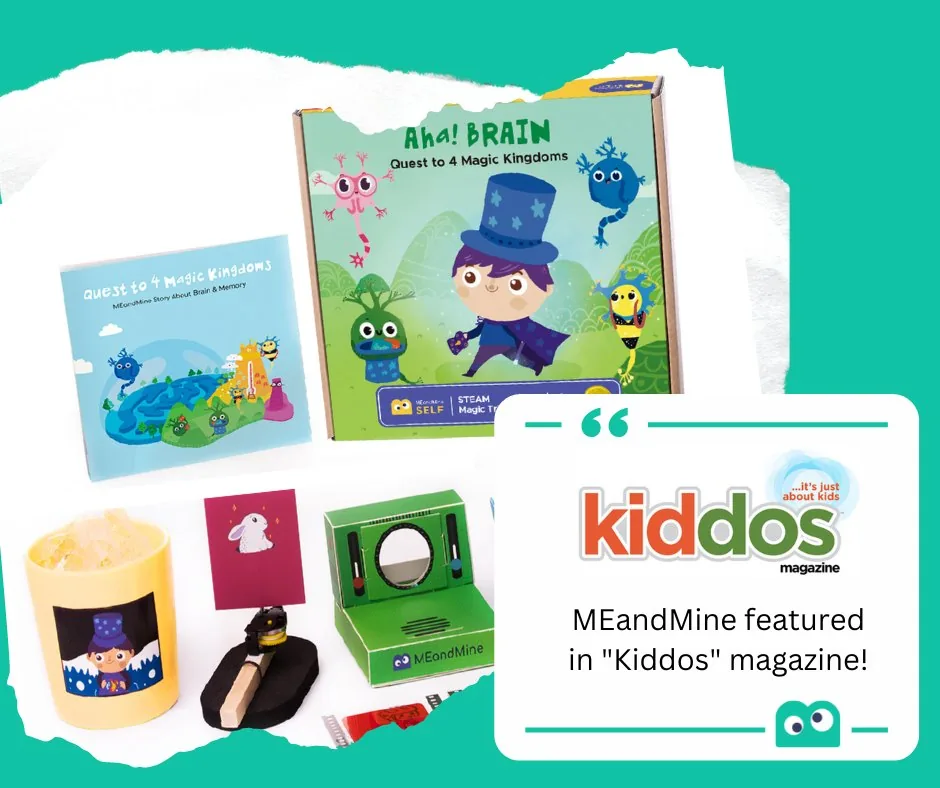
Magazine feature
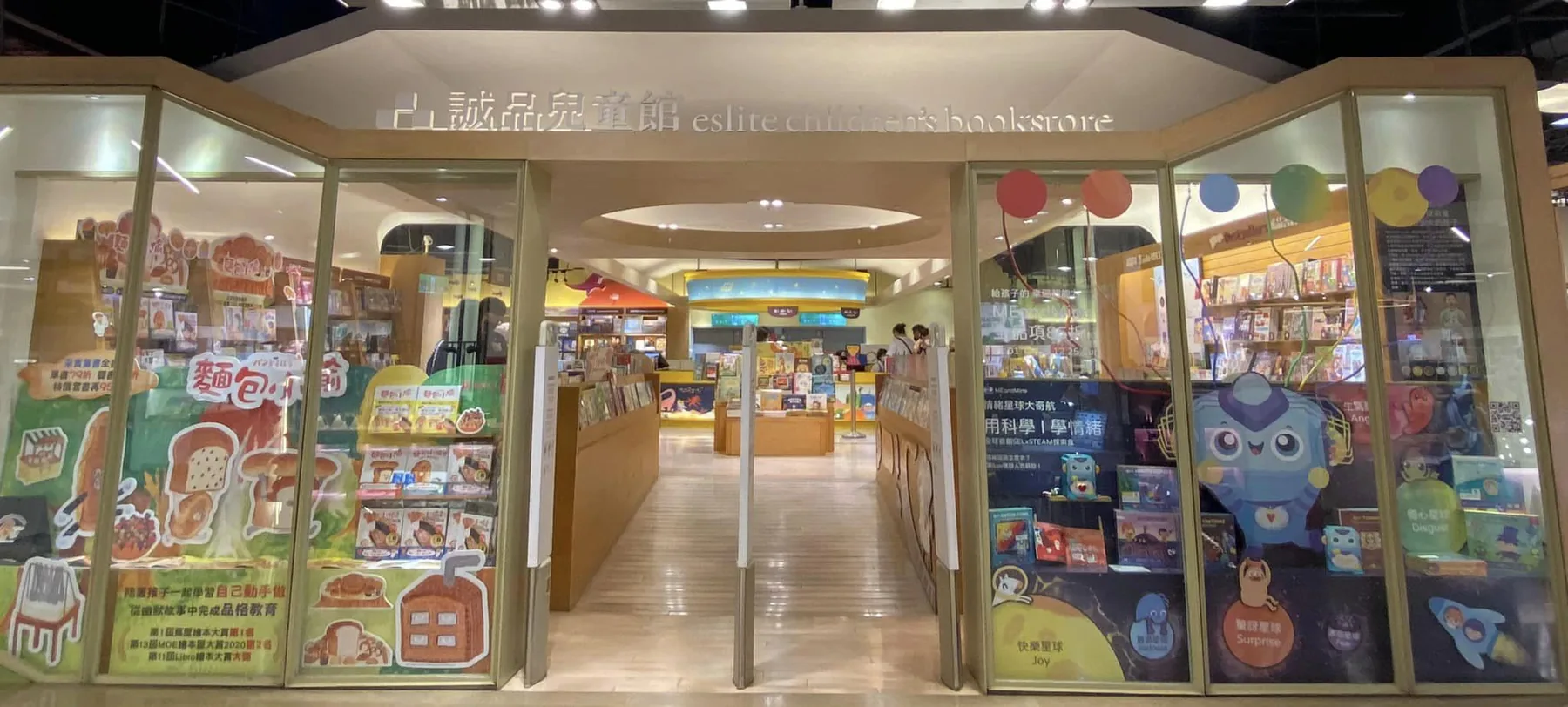
Retail presence in Taiwan
Recognition and retail references reflect the product’s historical launch period.
07Reflection
Making the invisible visible
The lens became my benchmark for tangible explanation.
The strongest learning object does more than illustrate an abstract idea. It lets the child perform that idea—and understand it through the result. That is the standard I carried from AHA! Brain into the work that followed.